Sold manuscript bifolium to client in Spain, client falsely claimed chargeback. I appealed in case and lost as bank rules in client favor
04 décembre 2025
- Juridiction: N/A
- Numéro du rapport de police: N/A
On November 25, I sold two manuscript bifolium from a copy of The Summa Fratris Alexandri, or Summa Theologica of Alexander of Hales, Circa 1250-1275. The client was one Simon Famtsov, located in Spain. There was a potential fraud concern on the order since it was placed from a different location, but since I've had clients do that before, I decided to just wait and see if the funds would deposit correctly before shipping. Funds arrived after a couple days, I promptly ship. December 5, shortly after the item arrives in Spain, client opens up a chargeback claim, stating the order was fraudulently placed. No direct contact or anything of the sort. I open a chargeback case, provide all evidence and information pertaining to the order. I lose as of January 1st.
Objets disparus
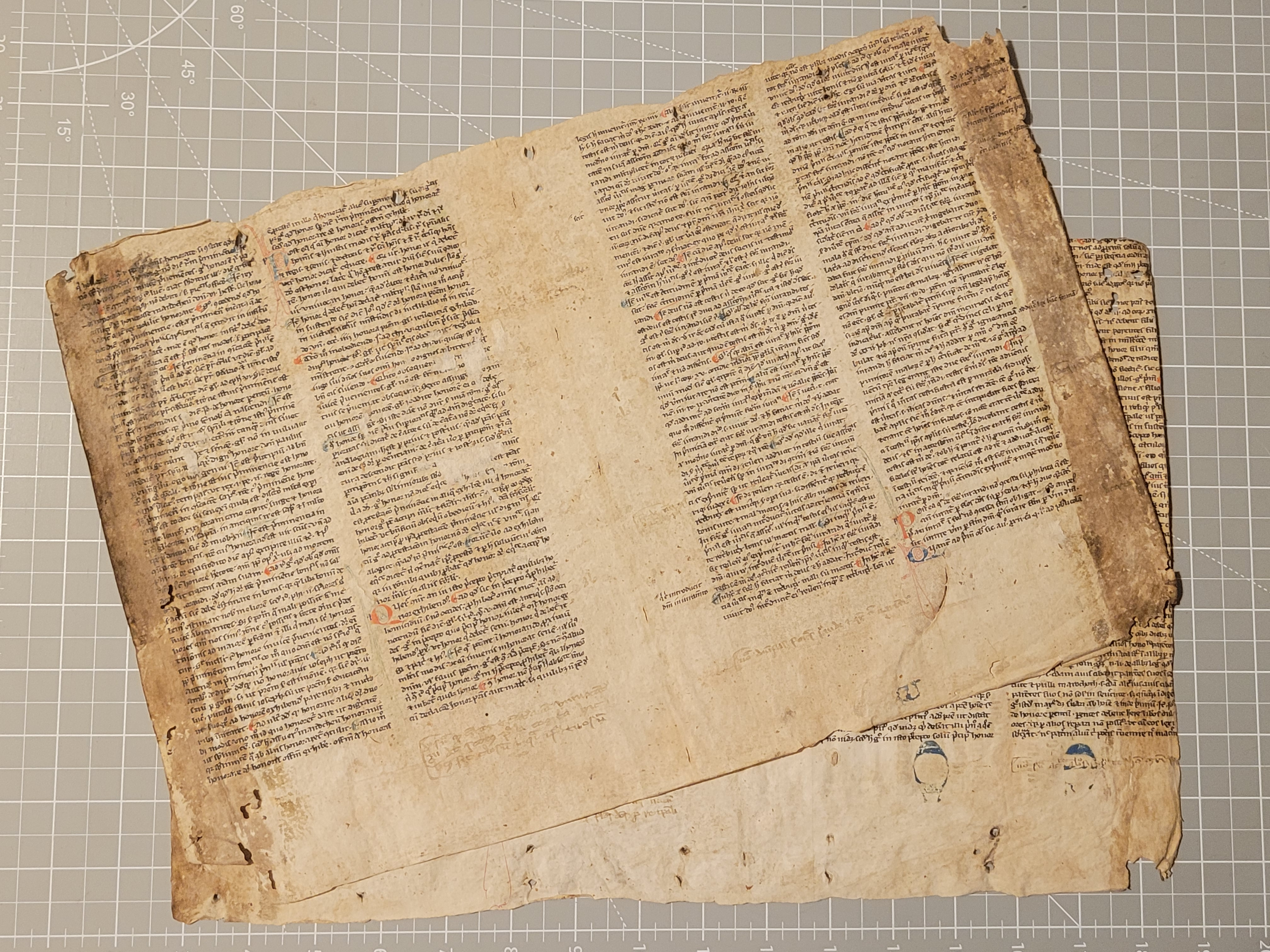
The Summa Fratris Alexandri, or Summa Theologica of Alexander of Hales, Circa 1250-1275. Two Large, Latin Manuscript Bifolios on Parchment from France. Recovered from a Binding
Two mid 13th century manuscript bifolios from the Summa Fratris Alexandri, also known as the Summa Halensis, or the Summa Theologica, a collaborative effort by the founding members of the Franciscan school at Paris, with the key authors being Alexander of Hales and John of La Rochelle. These leaves were likely produced in France during the second to third quarter of the 13th century. The manuscript is written in Latin, in an early Gothic textura miniscule script, in a black ink, with red and blue Lombard style initials and spring work. There is a comparable leaf dating circa 1260, that was once offered for sale at the Dreweatts sale of July 06, 2016. While Alexander drew mainly from his own disputations, he also selected ideas, arguments, and sources from contemporary, broken down into four parts. Though large in size, the work was heavily critiqued for erroneous passages and sections. These manuscripts were once used as binder’s waste, saved from a bookbinding, and used as a pastedown, as can still clearly be seen by remnants of paper stubbornly sticking on in places, obscuring a bit of text. These bifolios have been written in a 52-line format, two column format. Two bifolio fragments on parchment, 28.2 x 41 cm These manuscripts are in good shape, with wear and staining to the parchment. There is a small hole with a few words lost, and some paper obscuring a few more words as well. One of the columns of text to a bifolium has been trimmed, with a bit of text loss.
éléméents d'identificationmanuscript on parchment, with some wear noted
| Edition | |
| Date de publication | 1275 |
| État | missing |
| Editeur |