
ILAB Joins Provenance Researchers and Librarians in Frankfurt, Germany
>> DOWNLOAD THE ILAB PROVENANCE GUIDE HERE
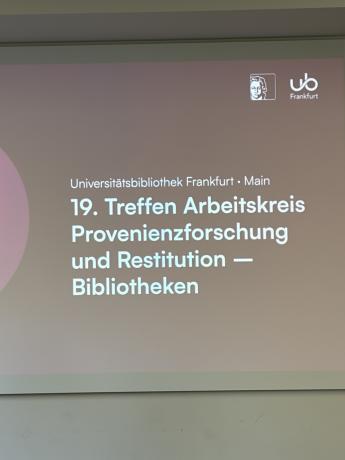
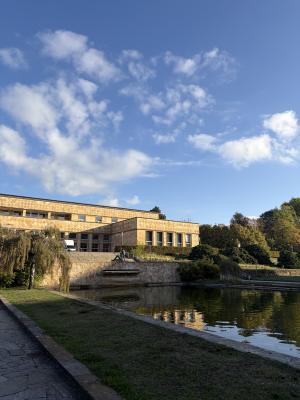
These were among the questions raised by ILAB at the 19th Meeting of the Working Group on Provenance Research and Restitution in Libraries (Arbeitskreis Provenienzforschung und Restitution – Bibliotheken), held at Goethe University Frankfurt from 21 to 23 September 2026.
The conference brought together librarians, provenance researchers and specialists from cultural institutions to examine historical ownership, the movement of books and collections, and the challenges of identifying material that may have been displaced, confiscated or dispersed.
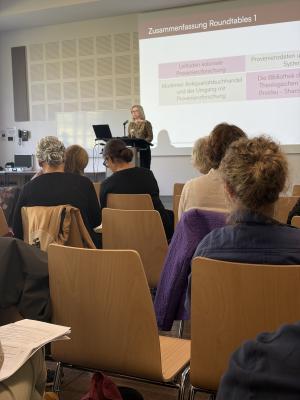
ILAB was invited to represent the international antiquarian book trade at the conference and contribute to the discussions by leading a roundtable on 22 September entitled The Modern Antiquarian Book Trade and Its Approach to Provenance Research.
The Frankfurt programme covered a broad range of subjects, with particular attention to the historical movement and dispersal of collections.
One panel discussion entitled Low Market Value, Priceless Memory – Who Determines the Value of Provenance? raised a question of relevance to booksellers and researchers alike: how should the significance of an object's history be assessed when its commercial value may be relatively modest?
Further presentations examined Nazi-era confiscations and potentially looted books in institutional collections, colonial provenance research, the documentation of provenance data, and the history of the library of the Jewish Theological Seminary in Breslau. Other sessions considered antiquarian bookselling during the National Socialist period, the dispersal of collections during the Soviet occupation and GDR years, and opportunities for closer cooperation with researchers in Eastern Europe.
ILAB's contribution focused on the practical realities of provenance research within the professional antiquarian book trade.
Today, ILAB represents more than 1,600 booksellers through 22 national associations, with members operating in 39 countries. The great majority are small, independent businesses, often run by a single bookseller or a small team. While professional booksellers possess considerable expertise in identifying, researching and describing historical material, their resources mostly differ from those of major research institutions.
One of the central questions raised during the Frankfurt roundtable was therefore "what constitutes a reasonable and proportionate level of provenance research for an antiquarian bookseller"?
A book printed in the 17th century may have passed through numerous private and institutional collections. Some owners left inscriptions, bookplates or other identifying marks; others left no trace. Historical catalogues, invoices and institutional records can sometimes help reconstruct these movements. In many cases, however, information was never recorded or has been lost over time.
The expectation that a bookseller should always be able to provide an uninterrupted chain of ownership extending back several centuries is therefore not necessarily realistic.
This does not diminish the importance of due diligence. Where there are indications of theft, unlawful removal or questionable ownership, further investigation is essential, regardless of an object's commercial value.
However, ILAB believes that a distinction must be made between the due diligence necessary to establish whether an object can legitimately be offered for sale and potentially open-ended scholarly investigation of its complete history.
ILAB presented two examples from the trade in which historically significant material was offered to institutions but could not be acquired because gaps remained in its documented ownership history, despite the bookseller's best efforts to close those gaps. These cases raised questions about the consequences of acquisition policies when documentation cannot be recovered despite reasonable research efforts. The intention was not to question the importance of institutional standards, but to encourage discussion about how those standards can be applied proportionately.
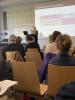
ILAB's presentation was very well received and prompted a lively discussion among the approximately 30 librarians and provenance researchers attending the workshop. Interestingly, it became apparent that the expectation of an uninterrupted chain of provenance, increasingly encountered by booksellers when dealing with certain institutions, was not generally shared by the German researchers and librarians present. Participants recognised that reconstructing a complete ownership history is often simply impossible, particularly for books that have passed through numerous collections over several centuries.
A particularly interesting point raised during the discussion was the importance of booksellers' archives for provenance research. Historical company archives, correspondence, catalogues and sales records can provide invaluable evidence about the movement of books and collections. Researchers expressed considerable interest in closer cooperation with antiquarian booksellers and improved access to their archives. This also raised the question of what happens to these records when a bookselling firm closes. Valuable historical information is frequently at risk of being lost. The Netherlands was mentioned as an example of a country with a centralised archival arrangement that could offer a model for preserving such material.
Another recurring request from librarians concerned the documentation of provenance features in booksellers' catalogues. Even where inscriptions, stamps, bookplates or other ownership marks cannot be identified, recording and, where possible, photographing them would considerably assist institutional researchers and help inform acquisition decisions.
ILAB's Provenance Guide, published in 2025, was welcomed as a useful resource. Following the workshop, several researchers shared additional reference materials and resources with ILAB that could be incorporated into future updates of the guide.
The Frankfurt conference provided another opportunity for ILAB to explain the practical realities of the antiquarian book trade and engaging directly with researchers and institutions; good cooperation benefits all parties. The positive reception and constructive exchange on the day encouraged ILAB to continue developing this dialogue and strengthening cooperation with institutions and the research community.



Report and images by Angelika Elstner